
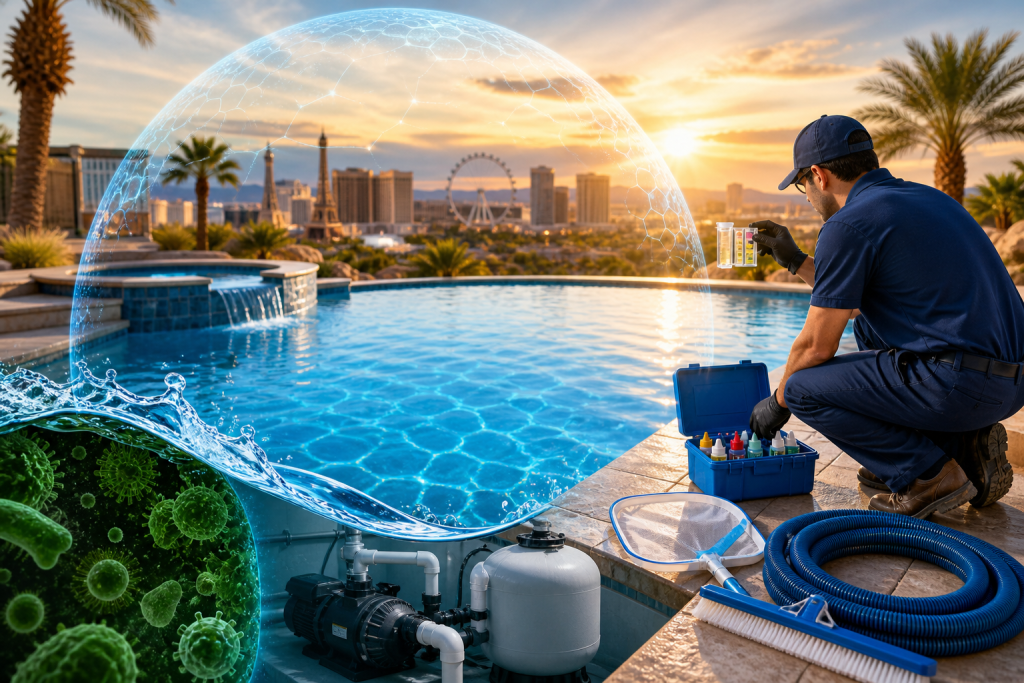

Why Regular Pool Maintenance Matters
Las Vegas pools face unique environmental challenges. High temperatures accelerate chemical evaporation, while strong winds carry dirt, debris, and dust directly into the water. These conditions make regular maintenance especially important.
Routine service helps prevent:
- Algae growth
- Cloudy or discolored water
- Equipment breakdowns
- Scale buildup
- Unsafe bacteria levels
- Filter clogging
- Pump inefficiency
Neglecting even basic maintenance tasks can lead to expensive repairs and reduced pool lifespan. Consistent cleaning and monitoring keep everything operating efficiently while preserving water quality.
Maintain Proper Water Chemistry
One of the most important aspects of pool care is balancing water chemistry. Improper chemical levels can damage pool surfaces, irritate swimmers, and reduce sanitation effectiveness.
The primary chemical levels that should be monitored include:
Chlorine Levels
Chlorine sanitizes the water by killing bacteria and algae. Low chlorine levels can allow contaminants to grow quickly, especially during hot Las Vegas summers.
Ideal chlorine range:
- 1 to 3 ppm
pH Balance
pH affects swimmer comfort and sanitizer efficiency. Water that is too acidic or too alkaline can create multiple issues.
Ideal pH range:
- 7.2 to 7.8
Alkalinity
Total alkalinity stabilizes pH levels and prevents sudden fluctuations.
Ideal alkalinity range:
- 80 to 120 ppm
Calcium Hardness
Las Vegas water often contains high mineral content, making calcium monitoring especially important.
Ideal calcium hardness:
- 200 to 400 ppm
Regular testing allows pool owners to catch problems before they escalate into major maintenance issues.
Clean the Pool Consistently
Keeping the pool clean is essential for maintaining healthy water and preventing strain on filtration systems.
Skim Debris Daily
Leaves, insects, dust, and debris should be removed from the water surface regularly. Allowing debris to sink can stain surfaces and increase algae risk.
Brush Pool Walls and Tiles
Brushing helps remove algae spores, calcium buildup, and dirt from surfaces. Areas with limited circulation should receive extra attention.
Vacuum the Pool
Vacuuming eliminates debris that settles on the pool floor. Automatic cleaners can help reduce manual labor while improving consistency.
Empty Skimmer and Pump Baskets
Clogged baskets restrict water flow and force equipment to work harder. Emptying them regularly improves circulation and system efficiency.
Optimize Pool Filtration
The filtration system is the heart of any swimming pool. A properly functioning filter removes contaminants and helps maintain water clarity.
Run the Pump Long Enough
During hot weather, pumps should typically run:
- 8 to 12 hours daily
Adequate circulation ensures chemicals distribute evenly while helping filters remove particles effectively.
Backwash Filters as Needed
Sand and DE filters require periodic backwashing to remove trapped contaminants. Dirty filters reduce efficiency and increase energy consumption.
Replace Filter Media
Filter cartridges and media eventually wear out and should be replaced according to manufacturer recommendations.
Maintaining clean filters helps prevent cloudy water and reduces strain on pumps.
Prevent Algae Growth
Algae is one of the most common problems for Las Vegas pools. Warm temperatures and strong sunlight create ideal conditions for rapid growth.
Preventative steps include:
- Maintaining proper chlorine levels
- Brushing walls weekly
- Improving water circulation
- Using algaecide treatments when necessary
- Cleaning behind ladders and steps
Green, yellow, or black algae can spread quickly if ignored. Early prevention is far easier and less expensive than full algae removal.
From algae prevention to equipment care, pool service las vegas nv ensures pools stay clean, balanced, and ready for use in all seasons.
Inspect Pool Equipment Regularly
Pool equipment operates under demanding conditions year-round in Las Vegas. Routine inspections can help identify small issues before they become major repairs.
Pump Inspection
Listen for unusual sounds and monitor for leaks or reduced water flow. Pumps should operate smoothly without excessive vibration.
Heater Maintenance
If your pool includes a heater, inspect it regularly for proper ignition and temperature consistency.
Check Plumbing Connections
Leaks around fittings, valves, and pipes can increase water loss and utility costs.
Monitor Automation Systems
Modern pools often rely on automated controls for pumps, lighting, and chemical systems. Regular testing ensures these systems continue functioning correctly.
Protect Pools During Seasonal Changes
Although Las Vegas experiences mild winters, seasonal changes still impact pool care requirements.
Summer Maintenance
Hot weather increases:
- Water evaporation
- Chemical consumption
- Algae growth
- Pool usage
Pools often require more frequent testing and cleaning during summer months.
Winter Maintenance
Even during cooler weather, pools should not be neglected. Reduced circulation or poor chemical balance during winter can still lead to algae and equipment damage.
Year-round maintenance helps avoid costly spring cleanups.
Monitor Water Levels
Las Vegas heat causes significant evaporation, especially during summer. Low water levels can damage pumps and reduce circulation efficiency.
Water should generally remain:
- Midway up the skimmer opening
Pool owners should also monitor for abnormal water loss, which may indicate leaks.
Address Calcium Scaling Early
Hard water is common in Nevada and can lead to calcium buildup on pool surfaces, tiles, and equipment.
Signs of scaling include:
- White deposits on tile lines
- Rough pool surfaces
- Reduced heater efficiency
Preventative measures include:
- Monitoring calcium hardness
- Maintaining balanced pH
- Periodic descaling treatments
Addressing scale early helps preserve pool appearance and equipment longevity.
Schedule Professional Pool Inspections
Even diligent pool owners benefit from periodic professional evaluations. Experienced technicians can identify hidden issues that may not be obvious during routine maintenance.
Professional inspections may include:
- Leak detection
- Equipment performance testing
- Electrical safety checks
- Chemical analysis
- Filter assessments
Routine inspections often prevent larger repair expenses later.
Energy Efficiency Tips for Pool Owners
Operating a pool in Las Vegas can increase utility costs, especially during summer. Energy-efficient practices help reduce expenses while maintaining proper performance.
Use Variable Speed Pumps
Variable speed pumps consume less electricity than traditional single-speed systems.
Install a Pool Cover
Pool covers help reduce:
- Evaporation
- Heat loss
- Chemical consumption
- Debris accumulation
Upgrade to LED Lighting
LED pool lights use significantly less energy while lasting longer than traditional bulbs.
Maintain Equipment Properly
Clean filters and properly calibrated systems operate more efficiently and consume less energy.
Benefits of Hiring Professional Pool Services
Professional maintenance providers bring expertise, equipment, and consistency that many homeowners find difficult to maintain independently.
Benefits include:
- Accurate chemical balancing
- Early issue detection
- Time savings
- Improved water quality
- Extended equipment lifespan
- Reduced repair costs
Experienced technicians understand the specific challenges posed by the Las Vegas climate and can customize maintenance schedules accordingly.
Common Mistakes Pool Owners Should Avoid
Avoiding these common mistakes can help maintain a healthier and more efficient pool:
Overusing Chemicals
Adding excessive chemicals can damage surfaces and irritate swimmers.
Ignoring Small Equipment Issues
Minor leaks or noises can quickly become major repairs if ignored.
Inconsistent Cleaning
Skipping regular cleaning allows algae and debris to accumulate rapidly.
Poor Water Circulation
Improper pump operation reduces filtration effectiveness and creates stagnant areas.
Delaying Filter Maintenance
Dirty filters strain equipment and reduce water clarity.
Consistency remains the key to successful pool ownership.
Conclusion
Maintaining a swimming pool in Las Vegas requires more than occasional cleaning. The desert climate creates unique challenges that demand regular attention, balanced water chemistry, effective filtration, and proactive equipment care. Following proven maintenance practices helps ensure pools remain safe, efficient, and visually appealing throughout the year.
From water testing and algae prevention to equipment inspections and seasonal care, every step contributes to protecting your investment and enhancing the swimming experience. Professional maintenance services can further simplify pool ownership while helping avoid expensive repairs and downtime.
By prioritizing consistent upkeep and expert care, pool owners can enjoy clean, refreshing water no matter the season.
FAQs
How often should a pool be serviced in Las Vegas?
Most pools benefit from weekly professional service due to the hot climate, dust, and extended swimming season.
Why does pool water become cloudy?
Cloudy water often results from improper chemical balance, poor filtration, debris buildup, or algae growth.
How long should pool pumps run each day?
In Las Vegas, pumps typically need to run between 8 and 12 hours daily, especially during summer.
What causes algae growth in pools?
Low chlorine levels, poor circulation, warm temperatures, and insufficient cleaning commonly contribute to algae growth.
Can hard water damage pool equipment?
Yes. High calcium levels can cause scaling on pool surfaces, heaters, and plumbing components if not properly managed.
Is professional pool maintenance worth it?
Professional maintenance helps ensure accurate chemical balancing, efficient equipment performance, and early problem detection, often reducing long-term repair costs.