
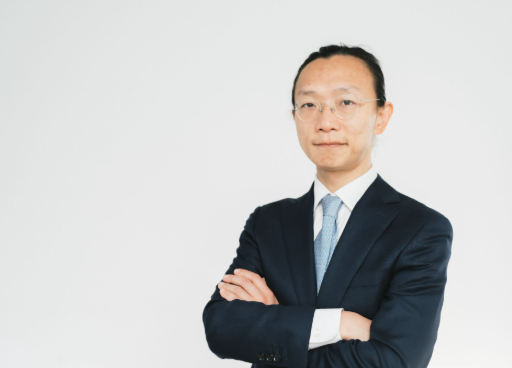

The outcome of a FINRA arbitration can turn on how precisely the evidentiary record defines the claimed loss. In the case brought by J.P. Morgan Securities LLC against a Morrow Ni LLP client, Angus Ni and the Morrow Ni trial team focused the defense on the Regulation-SHO-compliant close-out cost identified in the record. J.P. Morgan pursued fraud and breach of contract claims seeking more than $6.4 million arising from a client’s short sale of a public company’s IPO stock. After a six-day evidentiary hearing, the panel denied the fraud claims and limited the client’s exposure to $279,250, with each side bearing its own fees.
What Regulation SHO Required in the J.P. Morgan Dispute
In this arbitration, the Regulation SHO issue centered on a compliant close-out cost of $279,250. Through cross-examination of J.P. Morgan Securities LLC witnesses, the Morrow Ni team established that J.P. Morgan knew that amount but chose to leave the position open, later closing it during a historic price spike that drove the claimed damages above $6 million.
The case involved Regulation-SHO compliance, unlocated short sales, and complex securities account mechanics. Angus Ni’s work on the Regulation SHO record kept the dispute focused on the relationship between the known close-out cost, J.P. Morgan’s decision to leave the position open, and the loss figure that followed the later price movement.
That distinction became central to the defense. Rather than treating the amount demanded by J.P. Morgan as the controlling measure of exposure, the Morrow Ni team focused on the evidence developed during the hearing and the significance of the $279,250 close-out figure within the dispute.
How Angus Ni, Esq. Used J.P. Morgan’s Own Witnesses
The Morrow Ni trial team, led by Angus Ni, built a decisive part of the defense through cross-examination of J.P. Morgan Securities LLC’s own witnesses. The testimony established that J.P. Morgan knew the Regulation-SHO-compliant close-out cost was $279,250 and chose to leave the position open before the later price spike increased the claimed damages.
Through the FINRA trial work led by Angus Ni, the team connected the close-out figure to J.P. Morgan’s own decisions concerning the position. The resulting record gave the panel a basis to distinguish between the $279,250 close-out cost and the substantially larger amount J.P. Morgan sought in the arbitration.
The hearing lasted six days and addressed fraud and breach of contract claims arising from the client’s short sale of IPO stock. The case therefore required close attention to securities account mechanics, Regulation-SHO issues, and the testimony offered by J.P. Morgan’s own witnesses.
The Panel’s Holding on the Close-Out Cost
The FINRA panel denied J.P. Morgan’s fraud claims in full and limited the client’s exposure to $279,250. It held that every dollar above the Regulation-SHO-compliant close-out cost was the direct and foreseeable consequence of J.P. Morgan’s own decisions, and each side was required to bear its own fees.
For Angus Ni, the result became part of a broader securities dispute practice centered on technically demanding records and hearing advocacy. In this matter, the difference between the amount originally sought and the final exposure rested on the evidence developed around the known close-out cost and the decisions that followed.
Why This Case Type Demands Technical Command of the Record
The J.P. Morgan matter involved several closely connected securities issues, including Regulation-SHO compliance, unlocated short sales, short-sale mechanics, and a disputed loss calculation. The Morrow Ni team had to address those issues within a six-day evidentiary hearing while testing J.P. Morgan’s position through its own witnesses.
In this proceeding, Angus Ni’s work with the Morrow Ni trial team focused on the record needed to establish what J.P. Morgan knew about the $279,250 close-out cost and what occurred after the position remained open. The panel ultimately attributed every dollar above that amount to J.P. Morgan’s own decisions.
The case also illustrates the significance of the evidentiary record in a broker-versus-customer FINRA arbitration. For Angus Ni and Morrow Ni LLP, the result was grounded in the specific account mechanics, testimony, and Regulation-SHO issues presented during the proceeding rather than in the size of the original demand.
That distinction is especially relevant to the way the matter fits within Morrow Ni LLP’s securities litigation practice. The arbitration combined technical securities issues with a contested damages theory and a hearing record developed through examination of the opposing party’s witnesses.
Angus Ni Attorney Experience and the Morrow Ni LLP Approach to Complex Arbitration Records
Angus Ni is an attorney and co-founder of Morrow Ni LLP, a boutique litigation firm serving Chinese individuals and companies engaged in complex disputes within U.S. and other English-speaking legal systems. His practice includes securities litigation, FINRA arbitration, international commercial arbitration, cross-border corporate disputes, and securities litigation risk matters involving listed companies.
Angus Ni’s securities litigation background includes his work at Bernstein Litowitz Berger & Grossman LLP, where he prosecuted securities class actions against U.S.-listed corporations on behalf of hedge fund and pension fund investors. Those matters involved multiple industries, diverse U.S. jurisdictions, and both domestic and international discovery.
Earlier in his career, he practiced in the litigation department of Debevoise & Plimpton LLP. His work there included complex arbitrations before ICC and ICSID Tribunals and large-scale corporate investigations across multiple jurisdictions.
That institutional experience now forms part of his work at Morrow Ni LLP. The J.P. Morgan FINRA arbitration reflects the securities-dispute side of that practice, combining technically complex account issues, cross-examination, and a documented hearing result.
About Angus Ni
Angus Ni is an attorney and co-founder of Morrow Ni LLP, a boutique litigation firm in the United States serving Chinese individuals and companies involved in complex disputes in U.S. and other English-speaking legal systems. His practice includes securities litigation, FINRA arbitration, international commercial arbitration, cross-border corporate disputes, and securities litigation risk matters involving listed companies.
Before co-founding Morrow Ni LLP, Angus Ni practiced at Bernstein Litowitz Berger & Grossman LLP, where he prosecuted securities class actions on behalf of hedge fund and pension fund investors, and at Debevoise & Plimpton LLP, where his work included ICC and ICSID arbitrations and large-scale corporate investigations. He is fluent in Mandarin and English, and Angus Ni’s work at Morrow Ni LLP focuses on complex commercial disputes involving cross-border and securities-related matters.