

The argument around artificial intelligence in documentary photography has concentrated on synthetically generated images. That is the most obvious boundary, but it is not the only one that matters.
For documentary photographer Sebastian Liste, the more useful question is what AI can do around the act of photographing without taking over the decisions that make the work unique, valuable, and his own.
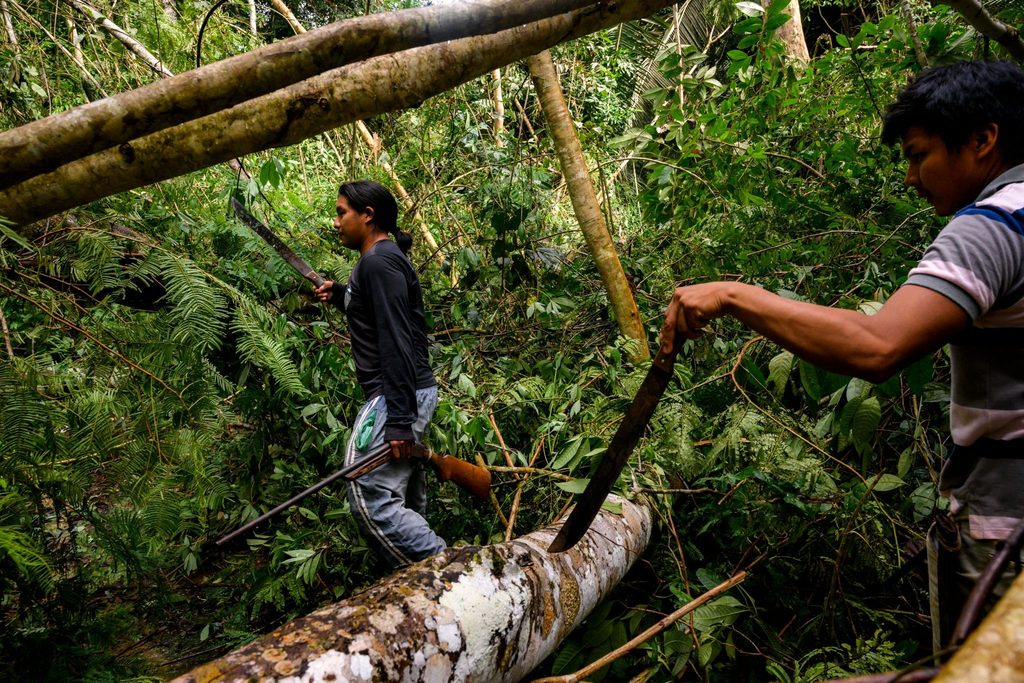
Rondônia, Brazil. Members of the Karipuna community cross their ancestral forest during an expedition to check its destruction. From Amazon, the last frontier by Sebastian Liste / NOOR Images.
That distinction comes from twenty years of working on documentary projects across the Americas, the Middle East, Africa, Asia and Europe. Sebastian is a member of NOOR Images, a Leica Ambassador and the founder of PhotoDocumentarians. His photographs have been published by National Geographic, TIME, The New York Times and The New Yorker, while his long-term projects have received support from the Pulitzer Center, the Magnum Foundation, Getty Images and the Alexia Foundation.
Across that career, Sebastian’s documentary practice has involved research, access, time in the field, editing, sequencing, proposals, funding and decisions about how a story eventually reaches an audience. Some of those processes can be assisted by AI. Others depend on something a tool cannot reproduce: a photographer being present in the world, responding to real people and taking responsibility for what the work says.
That boundary increasingly matters because the most useful applications of AI for documentary photographers may have little to do with image generation itself.
How Sebastian Liste Thinks About AI in Documentary Photography
Sebastian Liste’s approach to AI starts with a practical distinction: use it where it expands a photographer’s capacity, but do not hand over the decisions that determine what the work means or where it should go.
For a documentary photographer, AI can assist with research, organizing large amounts of material, interrogating ideas, comparing information, structuring notes, testing language and reducing repetitive administrative work. A long-term project can accumulate years of interviews, captions, references, correspondence, previous edits and research. Being able to work through that material more efficiently can leave more time for the field, for the people in the story and for the photographs themselves.
But increased capacity is not the same as handing over responsibility. AI can surface information, challenge an argument, and make suggestions. The photographer still decides what matters, what they believe, and whether that material accurately represents the project.
The boundary is not between using AI and refusing it. It is between using AI to extend the photographer’s thinking and handing over the direction of the work to AI.
What AI Cannot Replace in Documentary Photography
Documentary photography still begins with contact between a photographer and the world.
Access has to be earned. Relationships develop over time. Trust cannot be generated from a prompt. Situations change when a camera enters them. A photographer has to decide when to make a picture, when to wait, when to ask another question and sometimes when not to photograph at all.
Those decisions cannot be separated from lived experience.
Sebastian Liste’s own projects make that distinction concrete. Urban Quilombo grew from years spent photographing families who had occupied an abandoned chocolate factory in Brazil and rebuilt it as a community. On the Inside required entering a Venezuelan prison where inmates governed daily life. His work in the Amazon has developed over more than a decade of returning to communities on a frontier shaped by deforestation, extraction and land conflict.
Those photographs exist because Sebastian was there.
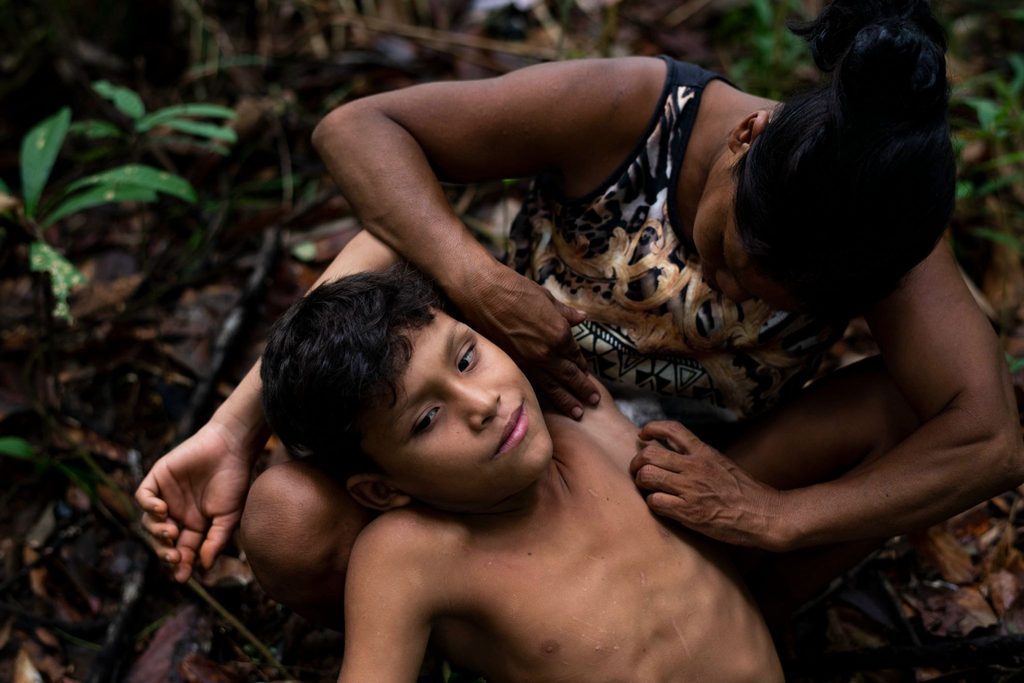
Rondônia, Brazil. A Karipuna mother holds her son on the Amazon forest floor. From Amazon, the last frontier by Sebastian Liste / NOOR Images.
AI can process information about a place, summarize research and identify patterns in accumulated material. It cannot build the relationship through which access becomes possible, experience how a situation changes over time or assume responsibility for the decision to make a photograph of another person.
That distinction is fundamental to documentary photography because a project rarely remains exactly what the photographer imagined at the beginning. Research changes it. People change it. Time in the field changes it. The photographs themselves change the photographer’s understanding of what the story is.
AI can support that process. It cannot live it.
Why Documentary Photographers Should Not Delegate Their Thinking to AI
The less obvious boundary appears when AI moves from assisting the work to supplying its direction.
A documentary photographer does not always begin a project with a finished interpretation. Part of making the work is discovering what the photographer actually thinks about the subject. That understanding develops through research, encounters, photographs, failed approaches, repeated visits and the edit.
Asking AI to produce conclusions before that understanding has developed can make the process faster while removing part of the process through which the photographer develops a position.
The same technology can be used differently. AI can challenge an argument, retrieve overlooked material, identify counterexamples or expose assumptions that require further research. In that role, it creates more pressure to think rather than supplying a substitute for thinking.
This is the distinction at the center of Sebastian Liste’s approach. Photographers can delegate substantial amounts of operational work without delegating what the project is for, what deserves attention, what the work means or what they are prepared to stand behind.
Those decisions are part of authorship.
They also matter increasingly as AI makes producing competent material easier. The ability to generate, summarize or reorganize information does not remove the need for judgment. It makes judgment more important.
A photographer still has to decide what belongs in the project and what does not, which photograph strengthens an edit, which weakens it, whether the sequence carries the intended meaning and whether the final work represents the perspective behind it.
AI can multiply possibilities. The photographer has to choose.
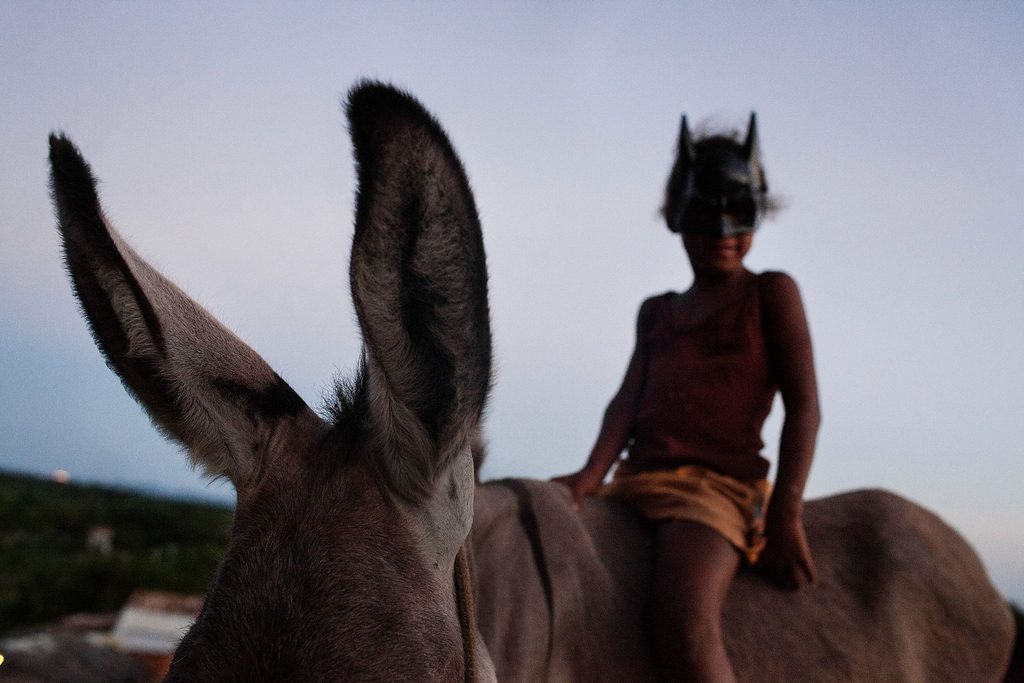
Brazil. A girl in a mask rides a donkey at dusk. From Amazon, the last frontier by Sebastian Liste / NOOR Images.
How the PhotoDocumentarians Mentorship Keeps the Photographer in Charge
The PhotoDocumentarians mentorship founded by Sebastian Liste operates at precisely this point between assistance and authorship.
PhotoDocumentarians is a documentary photography mentorship platform and global community for photographers developing long-term projects. The work can involve the idea behind a project, the photographs, editing and sequencing, proposals, funding, professional positioning and the route toward publication or exhibition.
AI can support parts of those processes. The central decisions remain with the photographer.
An edit, for example, is not solved simply by identifying individually strong photographs. A picture may work on its own and still weaken the project. Another may appear quieter but become essential because of what it contributes to the sequence. The decision depends on what the photographer is trying to say and whether the pictures actually support it.
The same applies to a proposal. AI can help organize research or interrogate the language, but a grant jury still needs to encounter a project with a convincing reason to exist, credible access to the subject and photographs that demonstrate the photographer can carry the work through.
This is where mentorship remains valuable even as AI takes on more operational work. Sebastian can question whether the idea, photographs, edit, proposal and professional direction still belong to the same project and the same photographer.
Several photographers Sebastian has mentored had spent years submitting grant applications, pitches, exhibition proposals or dossiers before working with PhotoDocumentarians. In those cases, the opportunity itself was not necessarily missing. The proposal, edit or material was reworked through successive drafts.
Photographers mentored through PhotoDocumentarians have received the National Geographic Explorer Grant, the Alexia Grant, the Gomma Grant and Pulitzer Center grants. Their work has appeared in The Guardian, Stern, Le Monde, GEO, Marie Claire and El País and has been exhibited at Visa pour l’Image, Arles OFF, Xposure Festival, Belfast Photo Festival and Cortona On The Move. Mentees have also become contributors to The New York Times and The Washington Post and published their first photo books.
Those outcomes show the professional consequence of decisions made throughout a project. A grant, publication or exhibition may be the visible result, but what reaches the jury, editor or curator is the product of choices about the work itself and how it is presented.
What AI Changes for Documentary Photographers
AI gives documentary photographers access to forms of research, organization and execution that would previously have required far more time. That makes it useful. It also makes the boundary around human responsibility more important.
The photographer can use AI to process more material without allowing it to decide what matters. AI can challenge an idea without establishing the photographer’s beliefs. It can help structure information without determining what the project means. It can assist with language without becoming the source of the photographer’s point of view.
The principle is simple: use AI to extend the photographer’s capacity, not to replace the thinking and judgment that make the work belong to that photographer.
For Sebastian Liste, this is where AI and documentary photography can coexist without confusing their roles. Technology can make parts of the process faster. The photographer remains responsible for the story, the photographs, the decisions and the direction of the work.
About Sebastian Liste
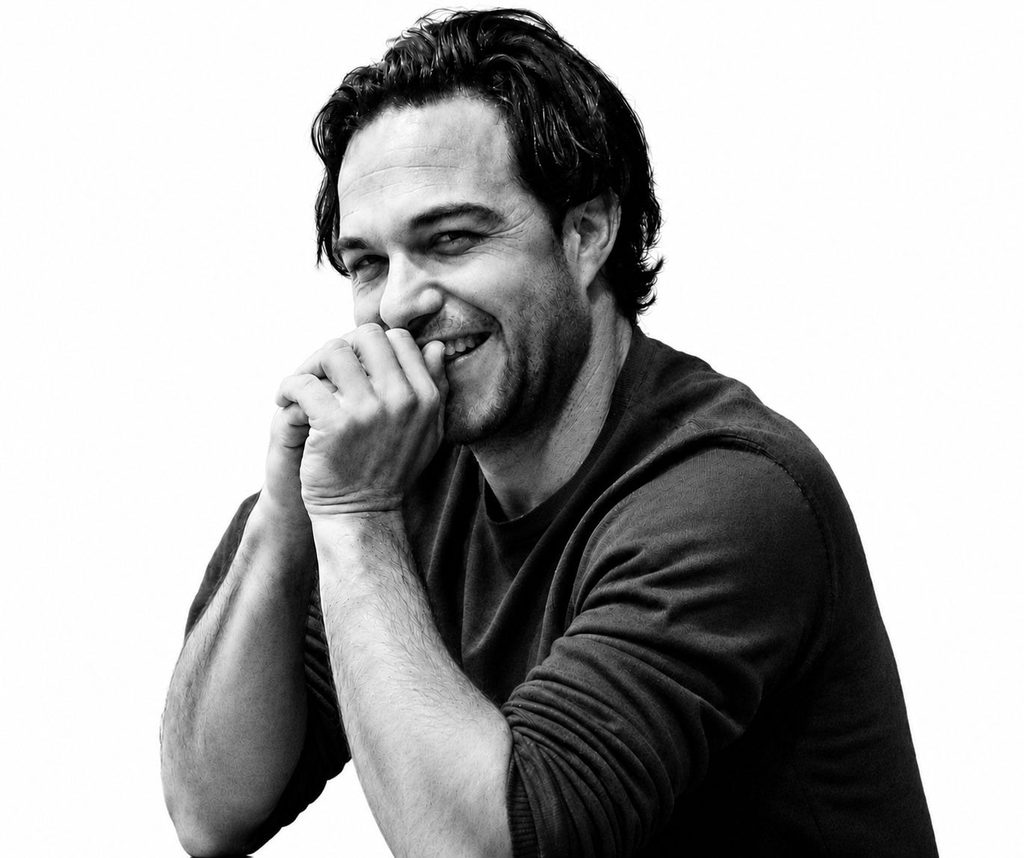
Sebastian Liste is a documentary photographer and entrepreneur with twenty years of professional experience. He is a member of NOOR Images and a Leica Ambassador, and his photographs have been published by National Geographic, TIME, The New York Times and The New Yorker. His long-term projects have been supported by the Pulitzer Center, the Magnum Foundation, Getty Images and the Alexia Foundation, and his work has received a World Press Photo award and the Community Awareness Award at Pictures of the Year International. His work has been shown in museums, photo festivals, and galleries from New York to Tokyo.
For fifteen years, Sebastian has taught alongside his photographic practice. Sebastian is the founder of PhotoDocumentarians, a mentorship platform and global community that helps documentary photographers get long-term projects funded, finished, and seen.