
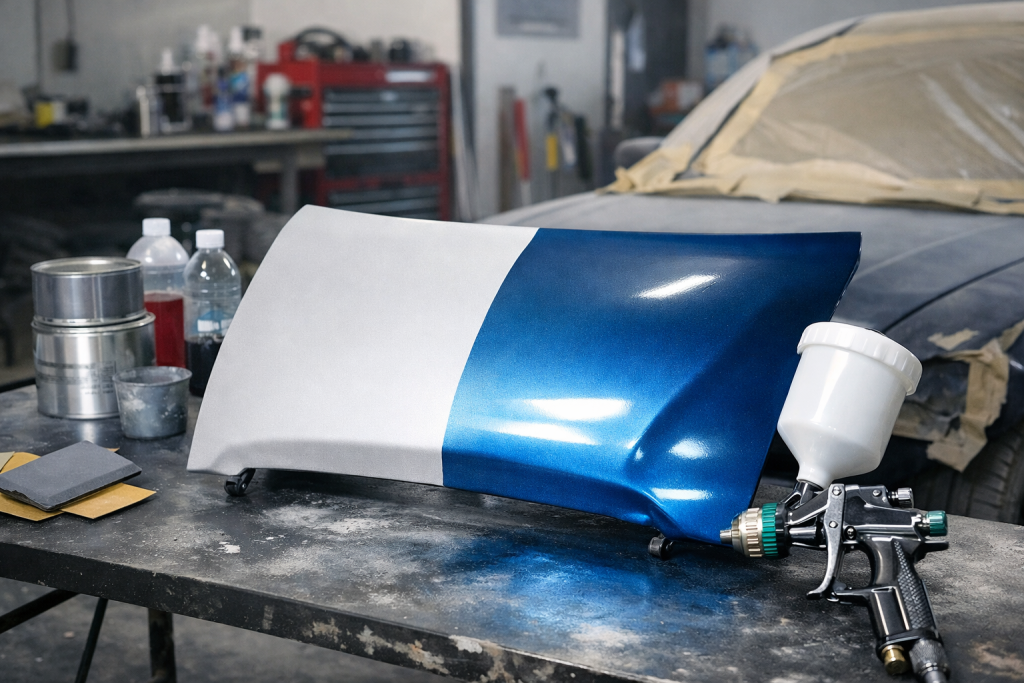

Understanding What a Car Base Coat Does
A base coat is the colored layer of paint applied over the primer and beneath the clear coat. It provides the vehicle’s color and visual effects such as gloss, metallic sparkle, or pearl depth. Unlike single stage paints that combine color and protection in one layer, base coat systems rely on a separate clear coat to add shine and durability.
The base coat itself is not designed to withstand environmental exposure for long periods. Its main purpose is to create an even, attractive color layer that bonds well with both the primer below and the clear coat above. Because of this, choosing a compatible system and applying it correctly is essential for long lasting results.
Why Choosing the Right Base Coat Matters for DIY Painters
For DIY projects, the base coat choice can make or break the final outcome. Professional painters often work in controlled environments with advanced equipment, while home projects usually involve garages or driveways. The paint you select must be forgiving enough to apply in less than ideal conditions while still delivering strong results.
Using car paint base coat can significantly enhance the final appearance and durability of your vehicle’s paint job. It’s crucial to choose high-quality materials and follow proper application techniques for the best results.
The right base coat helps minimize common issues like uneven coverage, blotchy color, or visible spray patterns. It also ensures that the clear coat adheres properly, which protects the paint from UV damage, moisture, and everyday wear.
Types of Car Base Coats Available
Not all base coats are created equal. Understanding the main types available will help you narrow down the best option for your DIY project.
Solid Color Base Coats
Solid colors are the simplest type of base coat and are often recommended for beginners. They do not contain metallic or pearl particles, making them easier to apply evenly. Solid colors are forgiving when it comes to minor application mistakes and touch ups.
Metallic Base Coats
Metallic base coats contain fine aluminum flakes that reflect light and create a shimmering effect. While visually striking, they require more careful application. Uneven spraying can cause the metallic particles to cluster, leading to streaks or patchy areas.
Pearl Base Coats
Pearl finishes use translucent particles to create depth and color shifting effects. These are the most challenging to apply evenly, especially for DIY painters. Pearl base coats often require precise layering and consistent technique to avoid color variations.
Water Based vs Solvent Based Base Coats
Another important decision is choosing between water based and solvent based base coats.
Water based base coats are more environmentally friendly and produce fewer fumes. They are increasingly popular in professional shops and can be suitable for home use with proper ventilation. However, they may require more controlled drying conditions.
Solvent based base coats are still widely used in DIY projects due to their durability and ease of application. They tend to flash off faster and are more forgiving in varied temperatures. Many DIY painters find solvent based options easier to work with when painting at home.
Matching the Base Coat to Your Project Goals
Your ideal base coat depends on what you want to achieve with your project. Are you restoring a daily driver, repairing a panel, or building a show car? Each goal points to a different type of product.
For basic repairs or budget friendly refreshes, a solid color base coat from a reputable brand is often the best choice. If you want a custom look or factory style finish, metallic or pearl base coats can deliver impressive results with careful preparation.
Consider also how much time and effort you are willing to invest. More complex finishes often require additional coats, more sanding between layers, and greater attention to spraying technique.
Compatibility with Primer and Clear Coat
One common mistake in DIY painting is mixing incompatible products. Base coats, primers, and clear coats are designed to work as systems. Using products from the same manufacturer or confirming compatibility across brands reduces the risk of peeling, cracking, or chemical reactions.
Always check product data sheets to ensure your chosen car paint base coat works with your primer and clear coat. This step may seem tedious, but it protects your time, money, and effort.
Considering Your Skill Level and Equipment
Your experience level should influence your base coat choice. Beginners benefit from paints with longer flash times and smoother flow characteristics. These allow more time to correct mistakes and achieve even coverage.
Spray equipment also matters. Some base coats are formulated specifically for use with professional spray guns, while others are designed for hobbyist level equipment. Make sure the paint you choose matches your spray setup to avoid issues like poor atomization or uneven application.
Environmental Factors and Workspace Conditions
Temperature, humidity, and ventilation all affect how a base coat performs. If you are painting in a home garage, choose a base coat that tolerates a wider range of conditions. Reading manufacturer guidelines on ideal application environments will help you plan your project and avoid surprises.
Proper ventilation and safety equipment are essential, especially when working with solvent based products. Protecting yourself is just as important as achieving a great finish.
Budget vs Quality Considerations
While it can be tempting to choose the cheapest option, paint quality plays a major role in the final result. Higher quality base coats often provide better coverage, richer color, and easier application. They may cost more upfront but can save money by reducing the number of coats needed and minimizing rework.
Balancing your budget with quality is key. Investing in a reliable base coat ensures your DIY project looks good and lasts longer.
Final Thoughts on Choosing the Best Base Coat
Choosing the right base coat is about more than just color. It involves understanding your project goals, workspace conditions, and personal skill level. With careful planning and the right materials, a DIY paint job can deliver impressive results that rival professional work.
Taking the time to select the best base coat sets the foundation for a smooth application, a stunning finish, and long term durability. When done right, your hard work will show every time you see your vehicle in the sunlight.
Frequently Asked Questions
What is the easiest car base coat for beginners to use?
Solid color base coats are generally the easiest for beginners. They are more forgiving and easier to apply evenly compared to metallic or pearl finishes.
Can I use any clear coat over my base coat?
Not all clear coats are compatible with every base coat. It is best to use products from the same manufacturer or confirm compatibility before applying.
How many coats of base coat are typically needed?
Most base coats require two to three thin coats to achieve full coverage. Always follow the manufacturer’s instructions for best results.
Is water based or solvent based base coat better for home projects?
Many DIY painters prefer solvent based base coats due to easier application and faster drying times, but water based options can also work well with proper conditions.
Do I need professional equipment to apply a base coat?
While professional equipment helps, many base coats are designed for hobbyist spray guns. Choosing the right product for your equipment is more important than having the most expensive tools.