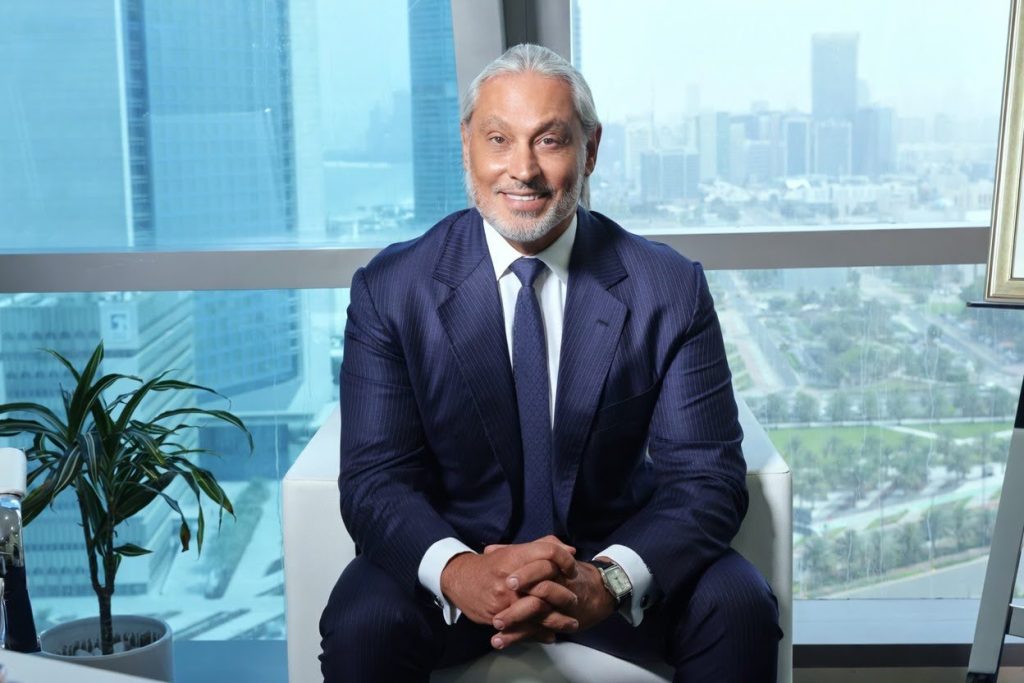

Most investors who diversify across multiple industries do so reactively — moving toward sectors that appear profitable in a particular cycle and exiting when conditions change. The career trajectory of Shaher Awartani, Chairman and Co-founding Partner of Silver Coast Construction & Boring LLC, reflects a different model. Across nearly three decades, the Abu Dhabi businessman expanded into construction, industrial manufacturing, real estate, hospitality, healthcare, private equity, and regulated financial advisory while maintaining a clear strategic through-line between each venture.
The portfolio built by Shaher Moh’d Ali Awartani was not assembled through disconnected investments. Each expansion reinforced an existing operational capability, institutional relationship, or governance framework already established in the businesses that came before it. The result is a multi-sector structure that behaves less like a collection of unrelated companies and more like a coordinated institutional ecosystem.
A Foundation in Construction That Made Everything Else Possible
Silver Coast Construction & Boring LLC was established in Abu Dhabi in 1997. Over the following 27 years, the company completed projects totaling USD 1.35 billion across the UAE while growing to a workforce of approximately 4,500 employees. That operational scale created more than revenue. It created institutional credibility, long-term client relationships, and a governance structure capable of supporting expansion into adjacent sectors.
Construction at that scale also develops a specific type of executive discipline. A chairman managing large infrastructure and development contracts must oversee timelines, subcontractors, compliance obligations, financing structures, and delivery accountability simultaneously. Those operating habits become transferable across sectors because they are rooted in structured execution rather than in any single industry.
This is what made Shaher Awartani’s multi-sector expansion strategy structurally coherent from the beginning. Construction was not simply the first business. It was the operating foundation that made every later expansion possible.
Shaher Awartani’s Entry Into Industrial Manufacturing
The first major expansion beyond construction came in 2010 with the establishment of Abaad Wood Industries, an Abu Dhabi-based manufacturer producing MDF boards, particleboard, and laminate wood products. The move reflected vertical integration more than diversification. A construction enterprise already dependent on these materials gained direct exposure to the supply side of the same market.
The logic behind the expansion matters because it reveals how the investor approached risk. Rather than entering an unfamiliar sector disconnected from existing operations, the UAE-based operator expanded into a business supported by relationships, market demand, and operational knowledge already accumulated through Silver Coast Construction & Boring LLC.
That pattern continued throughout the broader portfolio. Each sectoral move extended existing infrastructure instead of abandoning it. This is one reason the portfolio maintained coherence even as it expanded across seven industries.
The strategic logic becomes clearer when the portfolio is viewed sequentially. Construction established operational credibility and institutional relationships. Manufacturing strengthened supply-chain positioning within the same ecosystem. Real estate and hospitality deepened exposure to Abu Dhabi’s premium business environment, while healthcare and private equity expanded institutional partnership structures. DIFC-regulated advisory entities later formalized cross-border financial operations. The sequencing reflects deliberate compounding rather than opportunistic diversification.
From Physical Assets to Private Equity and Institutional Partnerships
The transition into private equity and regulated advisory work introduced a more institutional layer to the portfolio. In 2013, Equalis Capital Ltd was co-founded inside the Dubai International Financial Centre alongside H.E. Yousef Al Otaiba, the UAE Ambassador to the United States. That decision placed the business within a regulated financial jurisdiction recognized by institutional counterparties across multiple global markets.
The significance of the DIFC framework is not simply geographic. The centre operates under an independent legal and regulatory structure supervised by the Dubai Financial Services Authority. Choosing to operate inside that environment signals a preference for governance discipline, external oversight, and institutional operating standards.
The co-investment structures surrounding the healthcare and real estate businesses reinforce that same pattern. Reem Hospital, established on Abu Dhabi’s Reem Island, includes Mubadala Investment Company, InvestCorp of Bahrain, and Wisayah Capital — a subsidiary of Saudi Aramco — among its shareholders. These are organizations that conduct extensive diligence before entering long-term partnerships.
The consistency of those partnerships reflects the institutional growth model used by Shaher Awartani across multiple sectors. Governance credibility became a portfolio-wide operating principle rather than a feature isolated to one entity.
Real Estate and Hospitality as Portfolio Complements
The real estate and hospitality ventures within the portfolio function less as standalone investments and more as relationship infrastructure connected to the broader operating network. High Point Real Estate and Café Milano Abu Dhabi, both co-founded alongside H.E. Yousef Al Otaiba, expanded the portfolio into sectors serving many of the same institutional and high-net-worth environments already connected to the investment and construction businesses.
Hospitality in particular added a visible consumer-facing dimension to an otherwise infrastructure-oriented portfolio. Yet even this expansion followed the same strategic logic seen elsewhere: enter sectors where the existing relationship base already overlaps with the intended operating environment.
The Abu Dhabi businessman did not move from construction into unrelated speculative industries. The sectors remained geographically aligned, relationship-driven, and institutionally adjacent. That continuity reduced operational fragmentation while strengthening the portfolio’s overall credibility across the Gulf business ecosystem.
Shaher Awartani and the Geneva Dimension
Global Gate Capital Partners, founded in Geneva in 2015 with approximately USD 2 billion in assets under management, extended the portfolio into international investment management while maintaining the same governance-first orientation visible throughout the UAE operations.
Geneva serves as one of the world’s established wealth management and cross-border investment centres. The decision to operate there mirrors the earlier decision to establish entities inside the DIFC. Both jurisdictions are internationally recognized regulatory environments designed for institutional capital activity rather than informal private structures.
The investor’s later establishment of Yasa Capital (DIFC) Limited in 2024 further reinforced this direction. Licensed by the DFSA under a Category 4 framework, the entity formalized regulated advisory operations inside the same jurisdiction previously used for Equalis Capital more than a decade earlier.
This continuity matters because it demonstrates that cross-sector investment logic from Shaher Awartani remained consistent even as the portfolio became more internationally oriented. Regulatory discipline and institutional positioning scaled alongside the businesses themselves.
How Shaher Moh’d Ali Awartani Maintained Coherence Across the Expansion
Strategic coherence across seven sectors requires more than capital. It requires disciplined sequencing, governance continuity, and consistent relationship management across all operating environments. The portfolio associated with Shaher Moh’d Ali Awartani Abu Dhabi reflects all three.
First, the same institutional relationships appear repeatedly across different ventures. H.E. Yousef Al Otaiba co-founded multiple entities alongside the investor. Mubadala, InvestCorp, and Wisayah Capital entered structures requiring institutional governance standards. Those recurring relationships reinforce continuity across the portfolio rather than fragmentation between businesses.
Second, regulated operating environments became increasingly central to the structure. DIFC registration and DFSA licensing imposed governance standards that influence not only the advisory entities but also the reputation expectations attached to the broader portfolio.
Third, expansion followed operational adjacency rather than speculative diversification. Construction created the foundation. Manufacturing strengthened supply relationships. Real estate and hospitality deepened regional institutional connectivity. Healthcare and private equity formalized institutional co-investment. Regulated advisory entities extended the same model internationally.
This sequencing allowed Shaher Awartani to expand breadth without sacrificing strategic identity.
The Difference Between Seven Sectors and Seven Separate Bets
A broad portfolio can sometimes indicate scattered capital allocation without a unifying strategy. The record built by Shaher Moh’d Ali Awartani Abu Dhabi reflects something different: expansion through accumulation of governance capacity, institutional credibility, and operational infrastructure over time.
The coherence becomes visible when examining the portfolio collectively rather than business by business. The same principles appear repeatedly:
- preference for institutional co-investors,
- regulated operating environments,
- geographically connected markets,
- long-term operating horizons,
- sectors linked by relationship infrastructure.
Viewed through that lens, the portfolio is not seven disconnected bets competing for management attention. It is a layered operating structure built gradually over nearly three decades.
The durability of Silver Coast Construction & Boring LLC, the institutional partnerships surrounding Reem Hospital, the DIFC-regulated advisory framework, and the Geneva investment presence all point toward the same conclusion: the expansion strategy prioritized governance consistency as much as sector growth.
Seven sectors. One operating philosophy.
About Shaher Moh’d Ali Awartani
Shaher Moh’d Ali Awartani is an Abu Dhabi-based businessman and investor with nearly three decades of experience across construction, industrial manufacturing, real estate, hospitality, healthcare, private equity, and regulated financial advisory. He is Chairman and Co-founding Partner of Silver Coast Construction & Boring LLC, Co-founder of Yasa Capital (DIFC) Limited, and a Board member and shareholder of Global Gate Capital Partners in Geneva. His portfolio reflects a long-term approach to institutional growth, governance-oriented expansion, and cross-sector operational leadership across regulated and private-market environments. Learn more about Shaher Awartani’s cross-sector investment background.