
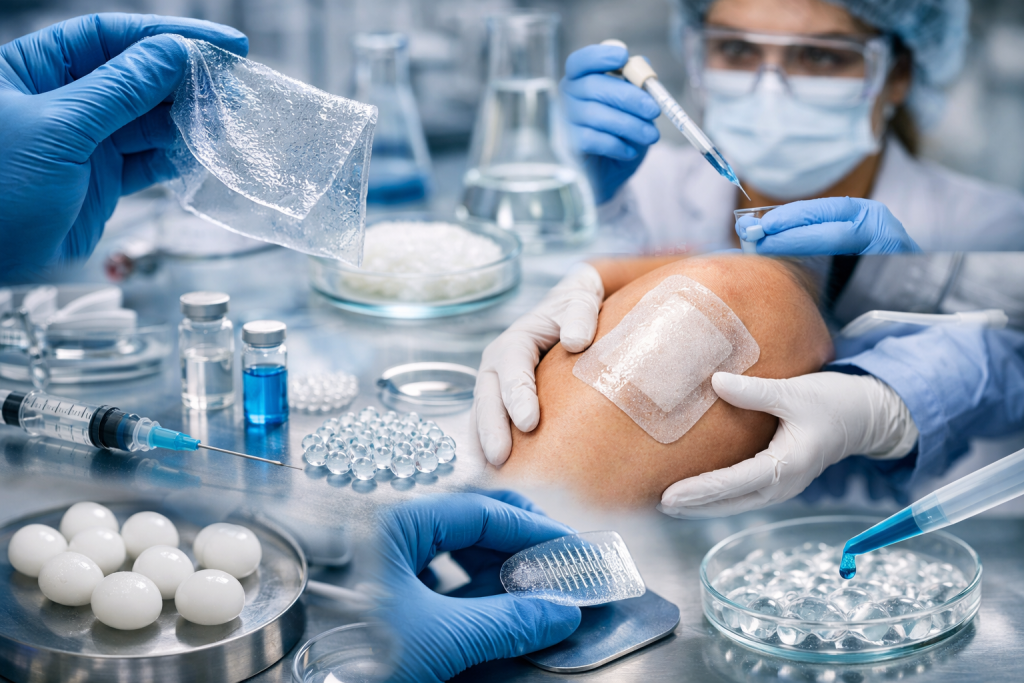

Understanding the Basics of Hydrogels
Hydrogels are three dimensional polymer networks that absorb and hold water or biological fluids. Their structure allows them to swell without dissolving, creating a soft and flexible material that can mimic natural tissue. This property is especially important in healthcare, where hydrogels are often used in contact with skin, wounds, or internal tissues.
Common polymers used in hydrogel manufacturing include synthetic materials such as polyvinyl alcohol and polyethylene glycol, as well as natural polymers like alginate, gelatin, and chitosan. Each material offers different benefits depending on the intended application. Synthetic hydrogels provide consistency and durability, while natural hydrogels offer biocompatibility and biodegradability.
Key Stages in Hydrogel Manufacturing
Hydrogel manufacturing is a precise process that involves multiple stages to ensure performance, safety, and reliability. The process typically begins with polymer selection, followed by crosslinking, shaping, hydration, and final sterilization.
Polymer selection is driven by the intended use of the hydrogel. Medical grade hydrogels require materials that meet strict biocompatibility standards. Crosslinking then creates the network structure that gives hydrogels their strength and water retention properties. This can be achieved through chemical or physical methods depending on the formulation.
After crosslinking, hydrogels are shaped into sheets, pads, beads, or other forms. Hydration levels are carefully controlled to ensure the product performs as intended. The final step is sterilization, which is critical for medical and pharmaceutical applications.
Quality Control and Regulatory Considerations
Quality control is a cornerstone of hydrogel manufacturing. Even small variations in formulation or processing can affect performance, shelf life, and safety. Manufacturers implement rigorous testing protocols to measure swelling capacity, tensile strength, purity, and microbial contamination.
Regulatory compliance is particularly important for medical hydrogels. Agencies such as the FDA and international regulatory bodies require detailed documentation, validated processes, and consistent manufacturing practices. Companies involved in R & D Medical Products often maintain dedicated quality assurance teams to ensure every batch meets required standards.
Applications in Healthcare and Beyond
Hydrogel manufacturing supports a wide range of applications, with healthcare being one of the most prominent. Hydrogels are widely used in wound dressings, burn care, and post surgical recovery products due to their cooling effect and moisture retention. They help create an optimal healing environment while reducing pain and infection risk.
Whether in surgical recovery or chronic pain management, hydrogel manufacturing brings medical-grade precision to modern healthcare delivery systems.
Beyond healthcare, hydrogels are used in drug delivery, where they can release medications gradually over time. They are also found in cosmetic products, agriculture, and even wearable electronics. Their adaptability continues to open new opportunities across industries.
The Role of Research and Development
Innovation in hydrogel manufacturing is fueled by continuous research and development efforts focused on smarter, more responsive materials. Scientists are advancing smart hydrogels that react to temperature changes, pH levels, or biochemical triggers, allowing them to deliver therapeutic agents with greater precision. In some applications, these hydrogels are designed to work alongside solutions such as Hypochlorous Acid, supporting controlled drug release, enhanced wound care, and improved antimicrobial performance based on environmental conditions.
R & D Medical Products teams play a vital role in evaluating new hydrogel formulations, strengthening material durability, and maintaining strict patient safety standards. Through close collaboration between researchers, manufacturers, and healthcare professionals, laboratory innovations including the integration of Hypochlorous Acid are transformed into reliable, real world medical solutions.
Sustainability and Future Trends
Sustainability is becoming an important consideration in hydrogel manufacturing. Manufacturers are exploring biodegradable polymers and environmentally friendly production methods to reduce waste and environmental impact. Natural polymers derived from renewable sources are gaining popularity, especially in single use medical products.
Future trends also include increased customization, allowing hydrogels to be tailored for specific patients or conditions. Advances in manufacturing technology are making it possible to produce more complex and precise hydrogel structures at scale.
Safety and Compatibility Factors
Safety is paramount when hydrogels are used in medical settings. Manufacturers must ensure that materials do not cause irritation, toxicity, or adverse reactions. Compatibility testing is especially important for hydrogels used in combination with antiseptics or other medical solutions such as <a href=”https://cityofpines.com/”>Hypochlorous Acid</a>, which is often used for wound cleansing and infection control.
Proper formulation ensures that hydrogels maintain stability and effectiveness when used alongside complementary medical treatments.
Choosing the Right Hydrogel Manufacturer
Selecting the right partner for hydrogel manufacturing requires careful evaluation. Experience, regulatory compliance, quality control processes, and research capabilities all play a role. Manufacturers with a strong focus on R & D Medical Products are often better positioned to deliver innovative and reliable solutions.
Transparency, documentation, and the ability to scale production are also important factors, especially for businesses bringing new medical products to market.
The Growing Importance of Hydrogel Manufacturing
As healthcare systems continue to prioritize patient comfort, faster healing, and advanced treatment options, hydrogel manufacturing will remain a critical component of innovation. From simple wound dressings to sophisticated drug delivery systems, hydrogels offer versatility that few materials can match.
With continued investment in research, quality, and sustainability, the future of hydrogel manufacturing looks promising across multiple industries.
Frequently Asked Questions
What is hydrogel manufacturing used for?
Hydrogel manufacturing is used to produce materials for medical dressings, drug delivery systems, cosmetic products, agricultural applications, and various industrial uses.
Are hydrogels safe for medical use?
Yes, medical grade hydrogels are designed to meet strict safety and biocompatibility standards and are extensively tested before use.
What materials are commonly used in hydrogels?
Common materials include synthetic polymers like polyethylene glycol and natural polymers such as alginate and gelatin.
How long do hydrogels last?
Shelf life depends on formulation and storage conditions. Medical hydrogels are typically designed for stability and consistent performance over time.
Can hydrogels be customized?
Yes, advances in hydrogel manufacturing allow for customization based on specific applications, including shape, thickness, and moisture content.